
|
|

| Subjects Represent How Imperial Gold Maca™ May Influence The Body When Used As Directed. |

HOME
Order Maca
Hot Maca Deals
What Is
Maca?
Maca Cultivation
Royal Oil of Oregano
Royal Energized Iodine
Maca Glucosinolates
Free Samples
Gelatinized Maca
Gelatinized Maca Trials
Women's Health
What Is Estrogen Imbalance
Maca Nutrition Chart
Maca Testimonials
What is Andropause
Fibromyalgia Links
What Is
Fibromyalgia
Men's Health
Books About Maca
Androgens
Super Male with
Horny Goat Weed
Testosterone
Erectile Dysfunction
Mood Swings
Infertility
 |
Hot
Flashes
Depression
Impotence
Estrogen
Health &
Aging
The Passion Plant
Male
Menopause
Perimenopause
Progesterone
Aging and
Sexuality
Natural HRT
Important
Links
Maca
Research
Maca
Wholesale
Nutritional Value
Maca For Health
Practitioners
Health Professional Reseller
Osteoporosis
What To Expect
Contact Us
Your Feedback
Be Our
Distributor
Return Policy
On
Line Security
HealthWell.com



|
What is Andropause?
Excellent Short Reading:
The
Native Food & Medicine Of Peru -
Maca
What's more, scientific studies show that this decline in testosterone can actually put one at risk for other health problems like heart disease and weakened bones. Since all this happens at a time of life when many men begin to question their values, accomplishments and direction in life, it's often difficult to realize that the changes occurring are related to more than just external conditions.
Gradual
Hormonal Decline Although with age, a decline in testosterone levels will occur in virtually all men eventually, there is no way of predicting who will experience andropause symptoms of substantial severity to seek medical help. Neither is it predictable at what age symptoms will occur in a particular individual. Each man's symptoms may be also different.
Is This A
New Phenomenon? Increased Diagnostic Capability Another reason why andropause has been under diagnosed over the years is that symptoms can be vague and can vary a lot among individuals. Some men find it difficult to admit that there's even a problem and enter a self-denial attitude. And often physicians didn't always think of low-testosterone levels as a possible cause. So these factors often led doctors to conclude that symptoms were related to other medical conditions (i.e. depression) or were simply related to ageing and often encouraged their patients to accept that "they were no longer studs". See Male Menopause
This
situation is changing rapidly. New blood testing methods are
available and Causes Starting at about age 30, testosterone levels drop by about 10 percent every decade. At the same time, another factor in the body called Sex Binding Hormone Globulin, or SHBG, is increasing. SHBG traps much of the testosterone that is still circulating and makes it unavailable to exert its effects in the body's tissues. What's left over does the beneficial work and is known as "bio-available" testosterone. Andropause is associated with low (bio-available) testosterone levels. Every man experiences a decline of bio-available testosterone but some men's levels dip lower than others. And when this happens these men can experience andropausal symptoms. These symptoms can and do impact their quality of life and may expose them to other, longer-term risks of low-testosterone. It is estimated that 30 percent of men in their 50s will have testosterone levels low enough to be causing symptoms or putting them at risk for heart disease, stroke and even cancer. Importance Of Testosterone
Testosterone helps to build protein and is essential for normal sexual behavior and producing erections. It also affects many metabolic activities such as production of blood cells in the bone marrow, bone formation, lipid metabolism, carbohydrate metabolism, liver function and prostate gland growth. Impact of Low Testosterone When there is less testosterone available to do its work, the testosterone target-organ response decreases, bringing about many changes. There are great variables in testosterone levels among healthy men so not all will experience the same symptoms or changes to the same extent. But typical responses to low bio-available testosterone levels include:
Why
Should Andropause Be Taken Seriously?
Andropause & Osteoporosis
Unfortunately, with advancing age and declining testosterone
levels, men, like women, seem to demonstrate a similar
pattern of risk for osteoporosis. What's more, approximately
one in eight men over age 50 actually have osteoporosis.
The incidence
of hip fractures rises substantially in ageing men, as it
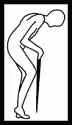
does in Low bone density can put one at risk of frequent fractures, associated pain, and in many cases, loss of independence. Wrists, hips, spine and ribs are most commonly affected. Two important consequences of osteoporosis are often seen as a slow but progressive rounding of the shoulders as well as a loss of height and back pain. Particularly devastating seem to be hip fractures, up to one third of patients never seem to regain full mobility.
Cardiovascular Risk
New evidence
suggests that a similar phenomenon occurs in men as A cause and effect relationship has not yet been established in large clinical trials. Further clinical research is needed into this important area of study. See Study
Andropause is often under diagnosed because symptoms can be
vague and can
So these
factors often lead doctors to conclude that symptoms were
related to
But this situation
is changing. New blood testing methods are available and
there
There are
several conditions in which you should never use
testosterone
In some other
cases testosterone replacement therapy may not be right for
you.
To help your
doctor determine your best treatment plan, you should also
discuss
In various clinical studies, very good responses to testosterone have been reported for men with low-testosterone and they include:
With
testosterone therapy, one's attitude improves, reinforcing
self-esteem Other potential benefits include maintenance or improvement in bone density, improved body composition, muscle mass and muscle strength, as well as improvement in visual-spatial skills.
Of course, any
ongoing strategy to reduce the symptoms and risks of
andropause should incorporate lifestyle approaches such as
optimal diet,
If you haven't tried Imperial Gold Maca, your in for a real treat when you do. First you will experience increased natural energy, as the body becomes more hormonally balanced testosterone levels increase with continued use. Spend a few minutes and pick several of the topics on your left and see for yourself! Learn How Maca can increase energy, balance hormones and enhance sexual function naturally.
Copyright © 2000-2018
ImperialGoldMaca.com. All Rights Reserved. Privacy Statement | Safe Shopping | Terms Of Use | Copyrighted Material |
 By
the time men reach between the ages of 40 and 55,
By
the time men reach between the ages of 40 and 55,  Yes
and no. In fact, andropause was first described in medical
literature
Yes
and no. In fact, andropause was first described in medical
literature  Testosterone
is a hormone that has a unique effect on a man's total body.
Testosterone is produced in the testes and in the adrenal
glands. It is to males what estrogen is to females.
Testosterone
is a hormone that has a unique effect on a man's total body.
Testosterone is produced in the testes and in the adrenal
glands. It is to males what estrogen is to females.
 In
healthy individuals, bone tissue is constantly being broken
down and rebuilt. In an individual with osteoporosis, more
bone tissue is lost than is regenerated. We've all heard of
women suffering from weaker bones, or osteoporosis, after
menopause. well in men, testosterone is thought to
In
healthy individuals, bone tissue is constantly being broken
down and rebuilt. In an individual with osteoporosis, more
bone tissue is lost than is regenerated. We've all heard of
women suffering from weaker bones, or osteoporosis, after
menopause. well in men, testosterone is thought to 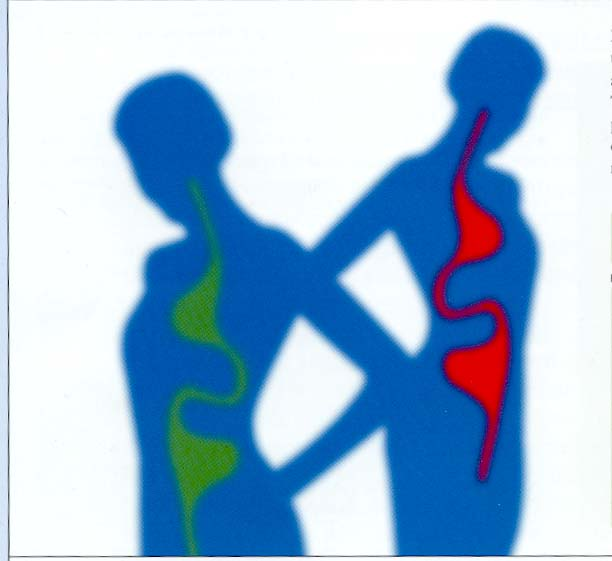


 In
many instances, testosterone replacement in men with
andropause can be highly effective and beneficial. It's not
for every
In
many instances, testosterone replacement in men with
andropause can be highly effective and beneficial. It's not
for every 


